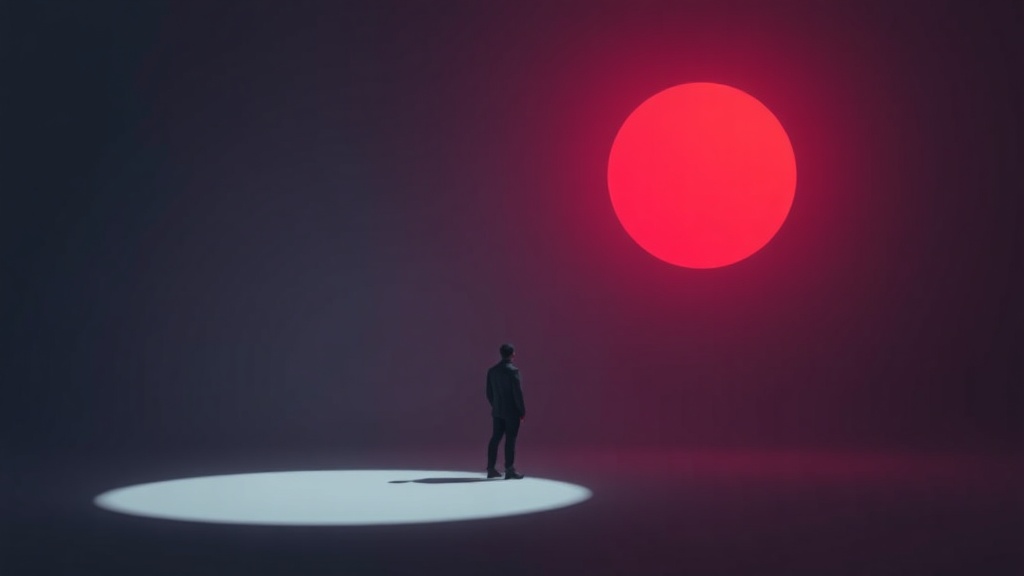
Finding Perfect Balance with Negative Space

A photographer stands on a crowded street corner in Tokyo. The scene is chaotic—neon signs blinking, crowds rushing by, and dozens of different textures competing for attention. They frame a shot of a single, lone cyclist moving through the intersection. Instead of trying to capture every detail of the movement, the photographer leaves the top two-thirds of the frame as a plain, unadorned gray sky. The result isn't a "missing" photo; it's a striking one.
Negative space is the area around and between the subjects of an image. It’s the "empty" space that gives your subject room to breathe. This post explores how to use subtraction to improve your compositions, why negative space is a tool for storytelling, and how to avoid the common mistake of making a photo look accidental rather than intentional.
What is Negative Space in Photography?
Negative space is the unoccupied area of a frame that serves to highlight the primary subject. While the subject is the "positive" space, the negative space provides the context and the visual rest required for the human eye to process an image without fatigue.
Think of it like a conversation. If everyone is shouting at once, you can't hear a single word. Negative space is the silence between the words that allows the meaning to land. It can be a solid wall, a clear sky, a blurred background, or even a dark shadow. It doesn't have to be "nothing"—it just has to be "unimportant" relative to your subject.
In portraiture, negative space often manifests as a large expanse of out-of-focus background (bokeh). In landscape photography, it might be a massive, unbroken expanse of desert sand or a calm ocean. The goal isn't to fill every pixel with something interesting; the goal is to direct the viewer's gaze exactly where you want it to go.
If you are struggling with where to place your subject to create this effect, you might want to revisit how to master the rule of thirds for stunning compositions. Using the grid lines on your camera or even a simple mobile app can help you position your subject off-center, allowing the negative space to do its job.
How Do I Use Negative Space to Improve My Composition?
You use negative space by intentionally selecting a subject that is simple and an environment that is non-distracting. It requires a shift in mindset from "What can I add to this shot?" to "What can I remove?"
There are a few specific ways to implement this technique depending on your genre:
- Minimalism: Use a single, high-contrast subject against a flat background. A single red bird against a white snowy field is a classic example.
- Directional Space: Leave more space in the direction the subject is looking or moving. If a person is looking to the right, leave the right side of the frame open. This creates a sense of anticipation.
- Isolation through Depth: Use a wide aperture (like f/1.8 or f/2.8) to blur out the background. This turns a messy street into a soft, creamy texture that doesn't compete with your subject.
It's easy to overdo it, though. If you leave too much empty space without a strong subject, the viewer's eye just wanders off the edge of the frame. You need a reason for the viewer to stay. The subject must be strong enough to justify the emptiness surrounding it.
Does Negative Space Work for All Genres?
Yes, negative space is a versatile tool that works across street, portrait, landscape, and even macro photography. However, the way you apply it changes based on what you are shooting.
Here is a breakdown of how different styles utilize this concept:
| Genre | Typical Negative Space | Primary Goal |
|---|---|---|
| Portraiture | Blurred bokeh or solid walls | Isolate the person's expression |
| Minimalist Landscape | Sky, water, or sand dunes | Create a sense of scale and peace |
| Street Photography | Shadows or uncrowded alleys | Highlight a singular moment of action |
| Macro Photography | Out-of-focus textures | Focus purely on fine detail |
In street photography, the "empty" space is often a patch of shadow. By using a fast prime lens—perhaps a 35mm or 50mm f/1.4—you can plunge the background into darkness, making a single subject pop. This is a great way to deal with "busy" environments where you can't control the actual background.
When shooting architecture, negative space might be the vast blue sky above a building. This helps emphasize the lines and geometry of the structure. If you find your shots feel too "cluttered," you might need to check your lens choice. Sometimes, a telephoto lens is better for compressing space, but a wider lens can help you capture more "emptiness" to create that sense of scale. For more on this, check out my guide on choosing the right lens for your subject matter.
How Much Negative Space is Too Much?
Negative space becomes "too much" when the subject loses its impact and the image feels unbalanced or accidental. The distinction lies in the intention of the photographer.
If you take a photo of a person and they are a tiny speck in the corner of a massive, empty field, the viewer might wonder why you even bothered to take the photo. That's a lack of intent. To avoid this, ensure your subject is the undisputed hero of the frame. The negative space should serve the subject, not compete with it or diminish it.
Here are three signs your negative space is working:
- The viewer's eye goes immediately to the subject.
- The subject feels "contained" or "framed" by the emptiness.
- The empty areas add mood (e.g., a large dark area adding a sense of mystery or loneliness).
On the flip side, if the viewer's eye keeps jumping to a random corner of the frame or a stray branch in the background, you haven't used enough negative space—or you've used the wrong kind. You want the "nothingness" to be a stage, not a distraction.
One way to test this is to look at your photo at a very small scale—maybe even on your phone screen. If you can still tell what the subject is and why it matters, the balance is likely correct. If the subject disappears into the background, you need to reconsider your composition or your focal length.
For those interested in the technical side of how light and space interact, the Wikipedia entry on negative space provides a deep dive into the concept's origins in art theory. Understanding the math and the art behind it can help you realize that "empty" isn't a lack of content—it's a deliberate choice.
Don't be afraid to leave things out. In a world where everyone is trying to capture everything, the person who captures the essence through subtraction often stands out the most.