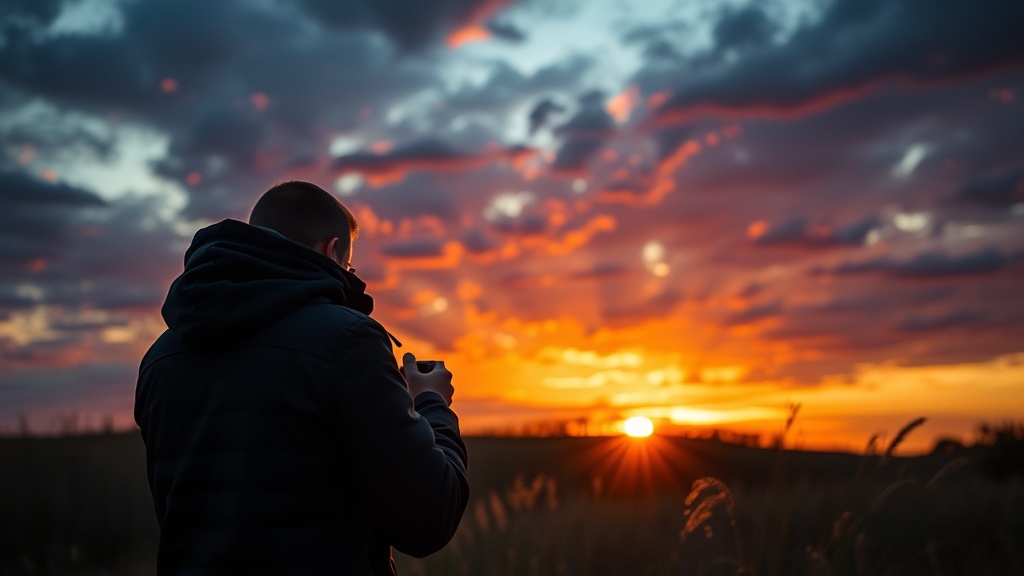
Master Golden Hour Photography: Capture Stunning Warm Light

Quick Tip
Shoot during the first or last hour of sunlight for naturally warm, diffused light that adds depth and emotion to your photos.
Golden hour photography transforms ordinary scenes into extraordinary images through warm, diffused light. This guide covers the timing, camera settings, and composition techniques needed to capture that magical glow—whether shooting landscapes, portraits, or cityscapes.
What time is golden hour for photography?
Golden hour occurs roughly one hour after sunrise and one hour before sunset. The exact timing shifts throughout the year—summer golden hour in Brooklyn might stretch to 90 minutes, while winter cuts it down to 45 minutes. Apps like The Photographer's Ephemeris calculate precise times for any location.
Here's the thing: the "hour" is more of a guideline. Light quality changes fast. The first and last 15 minutes often deliver the richest colors—deep oranges, soft pinks, and that coveted golden wash. Arrive early. Scout the location beforehand.
What camera settings work best during golden hour?
Use aperture priority or manual mode with these starting points:
| Subject | Aperture | ISO | Shutter Speed |
|---|---|---|---|
| Portraits | f/2.8 - f/4 | 100-400 | 1/125s or faster |
| Landscapes | f/8 - f/11 | 100 | 1/15s - 2s (use tripod) |
| Street/City | f/5.6 - f/8 | 400-800 | 1/250s or faster |
That said, don't obsess over settings. The light does most of the work. Expose for the highlights—clipped highlights can't be recovered in post. Underexposing slightly preserves detail in bright skies.
How do you compose compelling golden hour shots?
Shoot toward the light for dramatic silhouettes and lens flare. Shoot with the light at your back for even, flattering illumination. Side lighting creates depth and texture—perfect for landscapes and architectural shots.
Worth noting: golden hour pairs beautifully with leading lines. Brooklyn's Brooklyn Bridge Park offers railings, pathways, and the Manhattan skyline all aligned with sunset views. The warm light reflects off glass buildings, doubling the golden effect.
Bring a lens hood. Flare can be artistic—or annoying. The catch? Warm temperatures and high humidity often enhance the color intensity. Cold, clear days produce crisper (but sometimes harsher) light.
For reliable results, the Canon EOS R6 Mark II and Sony A7 IV handle high dynamic range exceptionally well during golden hour. Budget shooters should consider the Nikon Z5—it's a workhorse in variable light.
Practice timing. Golden hour waits for no one. The best shots often come in those fleeting minutes when the sun kisses the horizon—when shadows stretch long and everything glows.