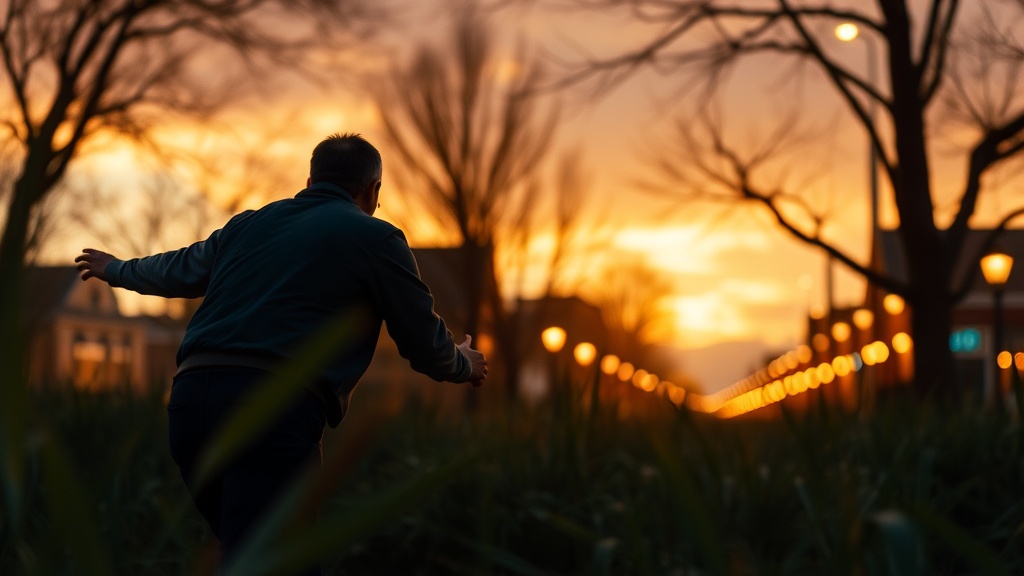
Creating Depth with Foreground Elements

Imagine you're standing on a coastline in Maine. The ocean looks vast, the sky is a pale wash of blue, and the waves are hitting the shore. You take a photo of the horizon, but the image feels flat—like a sticker stuck onto a piece of paper. This happens because your eyes see depth, but your camera sensor only captures a two-dimensional plane. To fix this, you need to incorporate foreground elements. This post breaks down how to use physical objects near your lens to create a sense of three-dimensional space in your digital files.
A good foreground element acts as a visual anchor. It pulls the viewer into the frame and directs their eyes toward the main subject. Without it, your viewer's gaze often slides right off the edge of the frame. You want to create a path for the eye to follow.
The most common mistake is ignoring the bottom third of your frame. Most photographers focus entirely on the subject or the background, leaving the foreground as empty space. That empty space is a missed opportunity for depth.
What Are the Best Types of Foreground Elements to Use?
The best foreground elements are objects that provide texture, color, or leading lines to direct the viewer's eye toward the subject. Depending on your environment, these can range from natural textures like rocks and flowers to man-made structures like fences or even a coffee cup on a cafe table.
When you're out in the field, look for these specific categories:
- Natural Textures: Moss on a tree trunk, jagged rocks, or patches of sand. These add a tactile quality to the image.
- Vegetation: Tall grass, wildflowers, or even a single leaf caught in the light. These work exceptionally well for macro-style depth.
- Man-made Objects: A weathered wooden pier, a stone wall, or a bicycle leaning against a fence. These provide a sense of human scale and context.
- Water and Light: Reflections on a puddle or the way light hits a ripple in the water.
If you're shooting in a controlled environment, like a studio or a still life setup, don't overlook the power of a simple linen cloth or a piece of dark wood. The texture of the surface can change the entire mood of the shot. It's a way to add "weight" to the bottom of your composition.
One thing to keep in mind is the relationship between the foreground and the subject. If your foreground element is too distracting—say, a bright red soda can in a serene forest scene—it will fight for attention. You want the foreground to support the subject, not compete with it.
To get a better handle on how to place these elements, you should probably master the rule of thirds. This will help you place your foreground interest in a way that feels intentional rather than accidental.
How Do I Use Depth of Field to Control Foreground Blur?
You control the amount of foreground blur by adjusting your aperture (the f-stop) and your physical distance from the subject. A wide aperture creates a shallow depth of field, which blurs the foreground and makes the subject pop, while a narrow aperture keeps more of the scene in sharp focus.
This is where your technical knowledge of the exposure triangle becomes vital. If you want that dreamy, soft-focus foreground, you'll want a low f-number like f/1.8 or f/2.8. This creates a "bokeh" effect that can be incredibly pleasing. However, if you want the viewer to actually see the texture of the rocks in the foreground, you'll need to stop down to f/8 or f/11.
There's a fine line here. If the foreground is too blurry, it might look like a mistake—a "smudge" at the bottom of the frame. If it's too sharp, it might distract from the main event. It's a balancing act. I often experiment by shooting the same scene at three different apertures to see which one feels right.
Here is a quick guide on how to decide your aperture based on your goal:
| Desired Effect | Aperture Setting | Visual Result |
|---|---|---|
| Dreamy/Abstract | f/1.4 - f/2.8 | Foreground is a soft, colored blur. |
| Subject Focus | f/5.6 - f/8 | Foreground has visible texture but is slightly soft. |
| Deep Landscape | f/11 - f/16 | Everything from the ground to the mountains is sharp. |
Don't forget that distance matters too. The closer your lens is to the foreground element, the more blur you'll get. If you're using a telephoto lens, like a Canon EF 70-200mm, the compression will naturally make the background feel closer, but the foreground can still be used to create a sense of scale.
Does the Light Affect How Foreground Elements Look?
Light affects foreground elements by determining how much texture and shadow they actually display. Harsh, direct light can wash out the details in your foreground, while soft, directional light can emphasize the shapes and textures that create depth.
Think about the way light hits a textured stone path. If the sun is directly overhead, the path might look flat and featureless. If the sun is low on the horizon—during the "golden hour"—the shadows cast by the small pebbles and cracks in the stone will create a sense of volume. This shadow-play is what truly builds depth. It's not just about the object itself; it's about the shadow the object casts.
When you're working with light, you're also working with color. A foreground element with a warm color can act as a "lead-in" to a subject in a cool-toned background. This color contrast is a powerful tool. It isn't just about where things are placed, but how they feel emotionally. A dark, moody foreground can make a brightly lit subject feel even more significant.
Sometimes, the light is too bright for the foreground you've chosen. If you're shooting a bright white flower in the foreground, it might "blow out" and lose all detail. In these cases, you might need to adjust your exposure or use a polarizing filter to manage reflections. It's worth noting that a well-placed shadow in the foreground can actually help ground your subject and prevent the image from feeling "top-heavy."
If you're struggling with color accuracy in these tricky lighting situations, check out my previous post on why skin tones can look muddy. The same principles of light and color temperature apply to how your foreground interacts with your subject.
One thing I've learned through years of shooting: never underestimate the power of a simple shadow. A shadow cast from a tree branch into your foreground can be much more interesting than the branch itself. It creates a sense of mystery and adds a layer of complexity that a flat image simply lacks.
When you're out shooting, try this: change your height. Get low to the ground. By lowering your camera, you're positioning the foreground elements closer to the lens, which naturally increases the sense of depth. It's a dead-simple way to transform a boring shot into something that feels immersive. You aren't just taking a picture of a scene; you're placing the viewer inside of it.
Steps
- 1
Identify a Subject
- 2
Position for Scale
- 3
Check Focus and Depth of Field
- 4
Angle Your Camera