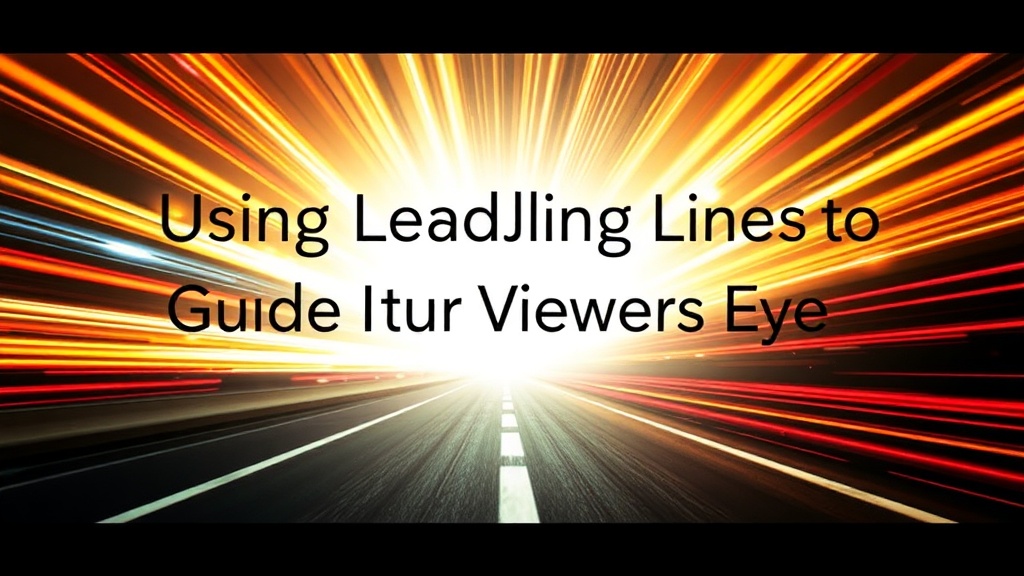
Using Leading Lines to Guide the Viewer's Eye

Quick Tip
Use paths, fences, or even shadows to point directly toward your main subject.
You'll learn how to use leading lines to direct a viewer's attention toward your subject and create a sense of depth in your compositions. Mastering this technique turns a flat, boring image into a structured story that guides the eye exactly where you want it to go.
What are leading lines in photography?
Leading lines are literal or implied lines within an image that lead the eye toward a specific point of interest. These lines can be anything from a physical road or a fence to a subtle shadow on a wall. They act as a visual roadmap for your audience.
When you use them correctly, the viewer doesn't just look at your photo; they move through it. You might use a pier to pull the eye toward a distant lighthouse or a set of train tracks to point toward a person standing in the distance. It's a simple way to add structure to a messy scene.
Common types of lines you can use:
- Diagonal lines: These create a sense of movement and energy.
- S-curves: Perfect for a more organic, flowing feel—think of a winding river.
- Converging lines: Where two lines meet in the distance (like railroad tracks) to create depth.
- Vertical lines: These add stability and height, often used in architectural shots.
How do I find leading lines in my environment?
Look for repeating patterns or long, straight edges that start near the edges of your frame and point toward your subject. Often, the best lines are the ones you didn't notice at first glance.
I usually scan the ground first. If I'm shooting with a wide-angle lens, the lines on the pavement or even a shadow cast by a building can become quite powerful. Don't forget to look up, too—the edge of a skyscraper or a power line can serve the same purpose. It's all about finding that visual path.
If you're struggling with a static scene, try changing your physical height. Getting low to the ground can make a simple curb look like a massive, sweeping line that leads straight to your subject. It's a great way to add drama without needing fancy gear.
Which camera settings help emphasize lines?
A deep depth of field is usually best for making lines look sharp and intentional from the foreground all the way to the background. Using a smaller aperture (a higher f-number) ensures that the lines stay crisp throughout the frame.
If you want to focus purely on a subject at the end of a line, you might use a shallower depth of field. This creates a "bokeh" effect where the lines are slightly blurred, which can actually help pull focus toward the subject. It's a bit of a balancing act.
| Technique | Best Aperture Setting | Visual Result |
|---|---|---|
| Deep Depth of Field | f/8 to f/16 | Sharp lines from front to back |
| Shallow Depth of Field | f/1.8 to f/4 | Blurred foreground/background lines |
When you're working with low light, remember that keeping those lines sharp might require a tripod. If your shutter speed drops too low, your lines might lose their edge due to camera shake. For more tips on keeping things steady, check out my post on capturing sharper handheld photos.